Your Rage is Sacred
Anger, Sorrow & Ceremony

Greetings, friends ~
I pray this finds you with access to joy and beauty, tenderness and sorrow and also to your sacred rage.
Not a rage that turns violent, blind, blaming or vengeful. But an anger that intersects with love. An anger that rises as an expression of care for self and others. An anger that illuminates what is holy. An anger that seeks and speaks to protect what and who are beloved to you. An anger that brings clarity to your yes and your no.
Anger is an emotion of boundaries. With all its heat, it can be scary. As we know, uncontained fire is dangerous. And without self somatic study, it can be difficult to distinguish anger’s flames from fear’s fight. And of course, they can arrive together when we sense threat. I used to fear my anger because I feared violence. But aggression and anger don’t have to go together. After years of studying my inner world and wounds, I realize that when I feel fight (or freeze or flight), that I’m in fear’s grip. When my spine aligns and my shoulders broaden and the inner wild cat’s breath rattles in my throat, a protective anger is present. It taken practice, time and deep listening to learn to clarify and own the underlying transgression, wound or fear.
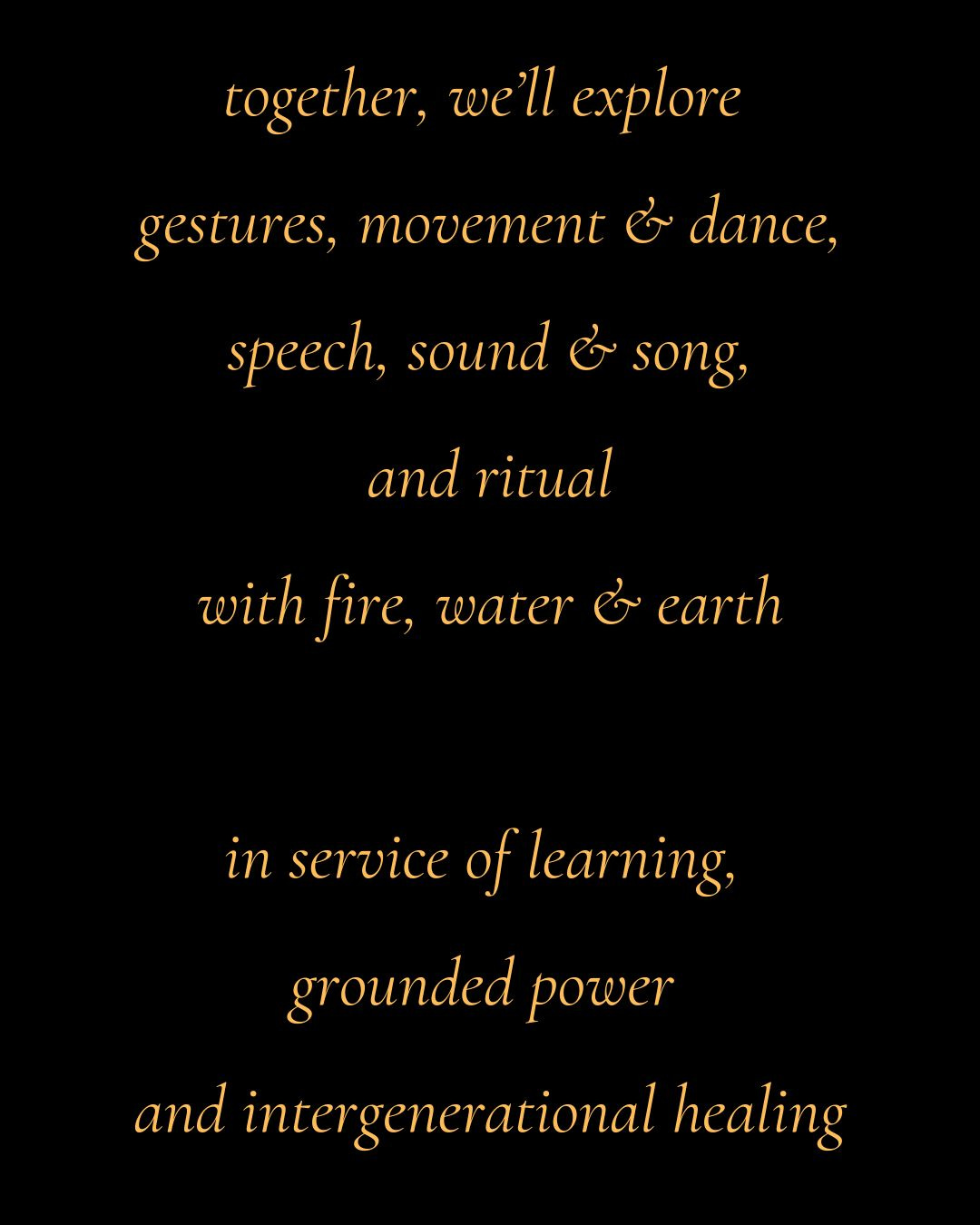
Over the past few decades, I’ve brought anger to my dance practice. The container of music and trusted people has been the safest place to explore, metabolize, learn, and sometimes, when the conditions are right, to transmute it. But at some point, it made sense to make more intentional, coherent spaces to explore together. Since 2013, I’ve experimented with and evolved movement-based grief (and rage) ceremonies. In those years, they’ve changed and deepened along with other studies, practices and ritual training. Each one is unique, depending upon the context of the time and what the ritual is in response to.
Welcoming and embracing anger in sacred, dedicated spaces, has helped me understand my boundaries which makes it easier to communicate needs, boundaries, desires with more clarity and compassion. Bringing the emotions to ritual has offered perspective on other people’s boundaries, needs and experiences too. Ritualizing the expressions of anger and sadness have liberated me from feeling victimized from certain narratives. And, when I’ve received the divine grace of a transpersonal sorrow and anger, my relationships have changed, in positive ways. Ultimately, the health of relationships is one metric of whether things are working.
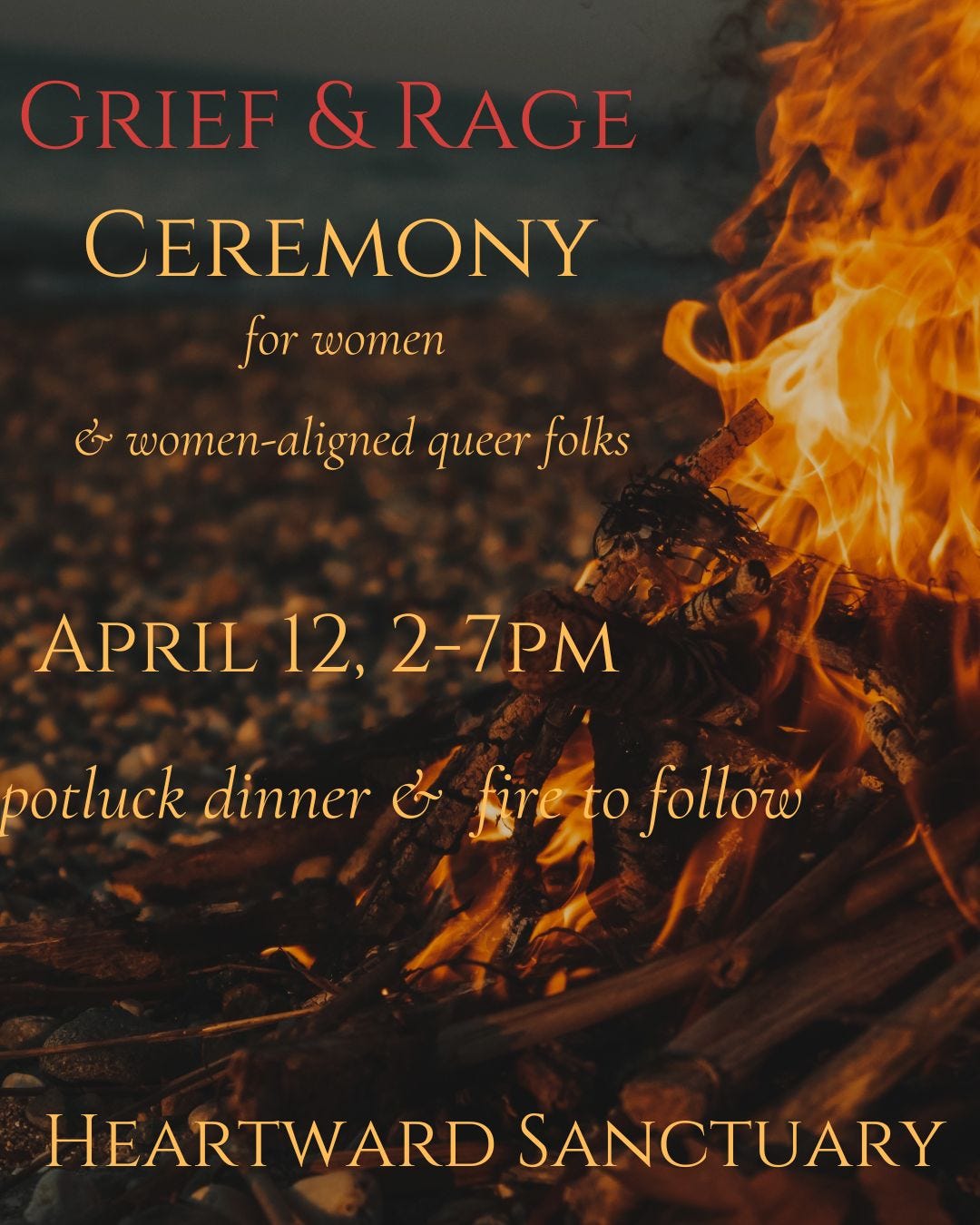
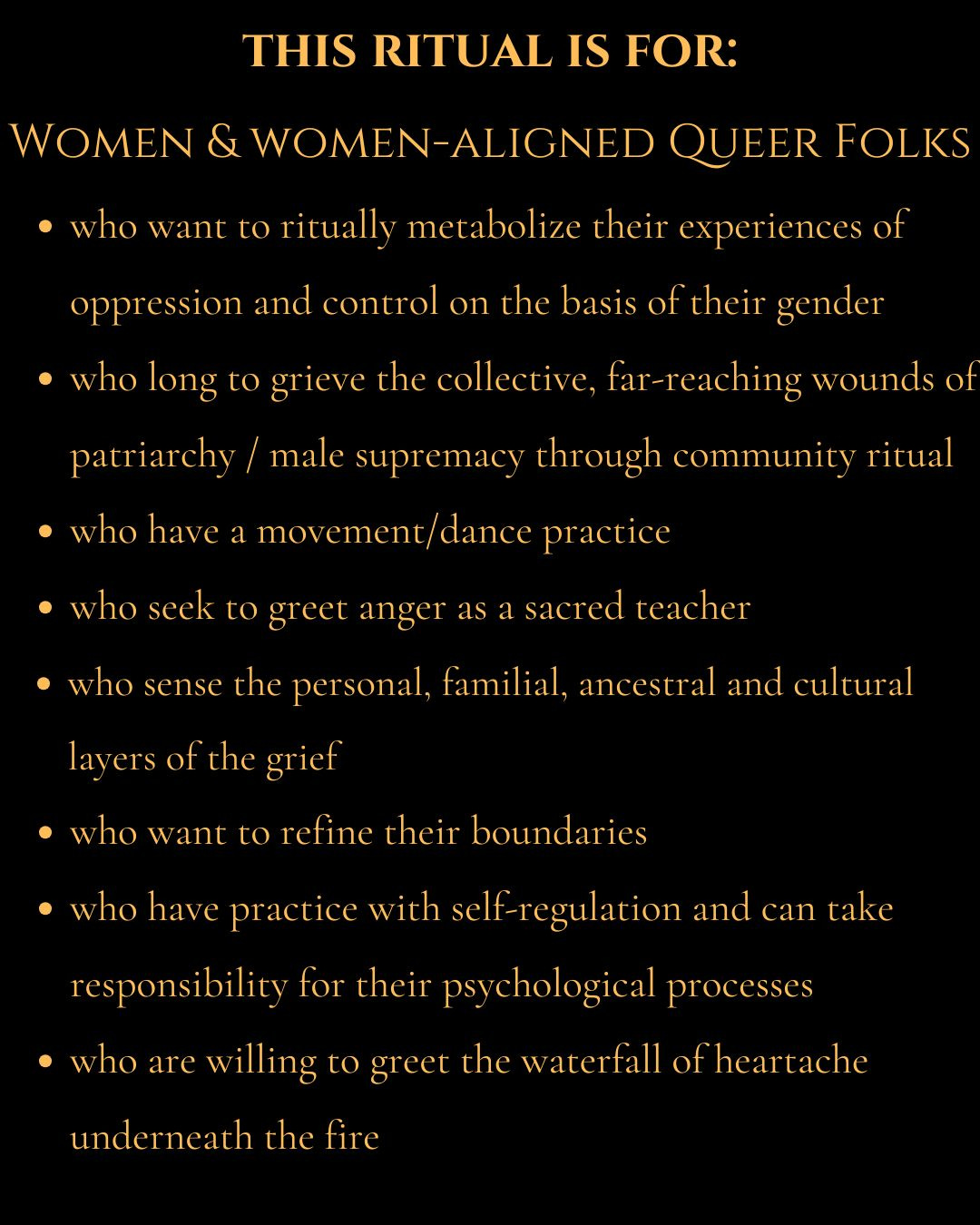
While I could (and may one day) write essays on the topic, today’s post was inspired by a dialogue. In preparation for the upcoming Women’s Grief & Rage Ceremony at Heartward Sanctuary, Alexis Dumain and I recorded a conversation about anger, ritual, dance, ancestral grief, temper tantrums and also the context of our relationship as we partner in this ritual. While the original intention of the video was to share with folks who may consider joining, the conversation feels relevant enough to share more widely. There are only a few spots left for the ceremony, but surely we all need access to tools for processing and embracing our heart’s ache and rage.
Thankfully, grief literacy is slowly returning to the west. Grief Ceremonies are kinda hot. As are classes, books and podcasts. Still, despite Kübler-Ross’s 5 stages, the word grief often conjures crying. But grief is multi-faced-faceted-and-phased. It’s complicated, weird, messy and wild. From a baby’s primal scream to the protestor’s march, grief is part of human life. May western culture continue to make spaces for all the aspects of grief, including the sacred faces of anger.
with a fiery heart ~
Julia
Part 1: History and context of grief ceremonies in this community:
Julia talks about how the first grief ceremony (called a “grief-wave” at the time) at The Flowjo in 2013 came to be and what that experience was like.
Malidoma Patrice Somé quote that Julia references: “…Our role in ritual is to be human. We take the initiative to spark a process, knowing that its success is not in our hands but in the hands of the kind of forces we invoke into our lives. So the force field we create within a ritual is something coming form the spirit, not something coming from us. We are only instruments in this kind of interaction between dimensions, between realms.” —from Ritual: Power, healing, and community
Part 2: What sets a ritual dance apart from ‘regular’ ecstatic dance?
Julia and Alexis discuss the importance of relationship and reciprocity in making and defining a ritual. They then clarify the kinds of ‘More Than’ entities and spirits that may be invoked in this kind of grief ritual.
Part 3: The line between honoring ancestral grief, versus taking it on
Julia and Alexis speak on how we can tap into our own grief around historical and ancestral wounds, without taking it on as ours to individually heal.
Part 4: Ritual safety
Julia and Alexis discuss how to discern and practice ritual safety on both a group and individual level.
Part 5: Tools for regulation
Julia and Alexis discuss additional tools available to individuals to help us navigate proximity to others’ intense emotions, respond to our own, and re-regulate.
Part 6: Permission for multiple expressions of grief and rage
Julia and Alexis underscore this ritual’s permission to express and experience grief in whatever ways that are needed -- even and especially the ones that are not socially palatable! They also discuss the contrast between bringing your grief to a ceremony as a sacred emotion, versus our society’s default of treating it as a ‘problem.’
Part 7: What is the ‘goal’ of working with grief & this specific ceremony?
Julia and Alexis draw the distinction between working with grief to get rid of or move past it, versus metabolizing it in a way that can lead to skillful action and ongoing, continual tending. They also discuss the components of their upcoming ceremony that are geared toward bridging the somatic practice of tending expressing grief with tangible, strategic action.
Part 8: The value of anger, or How to Throw A Sacred Temper Tantrum
In describing the flow of the day, which is set to include a facilitated ‘temper tantrum,’ Julia uses the story of guiding her nephew through his own anger to illustrate how anger can act as a catalyst in expressing our grief, as well as an invaluable teacher throughout the process.
Part 9: Followup to anger: Yelling at God
Julia describes how the willingness to direct her anger towards the divine has opened doors to experiencing divine grace as well.
Part 10: Our connection & the story of this collaboration
Alexis discusses how she and Julia initially met over 15 years ago, and why she approached Julia to collaborate on this project.
Part 11: Closing Thoughts: Safety, the rippling impacts of ritual, and grief as an expression of love
Julia relates the various guardians and precautions she took in the early grief rituals she held, and the benefit of multi-generational collaboration. We end on a prayer that the April 12th event be helpful for all involved, including the facilitators, ancestors, land, and the greater community to which they belong.
Frances Weller quote that Julia references: “Ritual invites the full expression of our long-suppressed emotions. Grief, in particular, requires a letting go whereby we drop deeply into the well of sorrow that has gathered and is longing for release…”
“In the absence of this depth of community, the safe container is difficult to find. By default, we become the container ourselves, and when this happens, we cannot drop into the well of grief in which we can fully let go of the sorrows we carry. We recycle our grief, moving into it and then pulling it back into our bodies unreleased.[...] We need to recover our right to ask for help in grief, otherwise it will continue to recycle perpetually. Grief has never been private; it has always been communal. Subconsciously, we are awaiting the presence of others, before we can feel safe enough to drop to our knees on the holy ground of sorrow.” --from The Wild Edge of Sorrow: Rituals of Renewal and the Sacred Work of Grief
If you’re local and interested to join, you can register here.
For more info, mentorship, individualized or group support, reach out via Heartward Sanctuary.